lift
goal
Fully functional prototype
focus
USP-research, Engineering solutions
tools used
FDM-printing (Bambu), Metal prototyping, Rendering (Blender)
year
2024
duration
3 weeks
lead by
ZHdK, ETH Zurich (Group project with Alessandra Brunner, Justin Eymann, Felix Schoeller and Marc Blöchlinger)
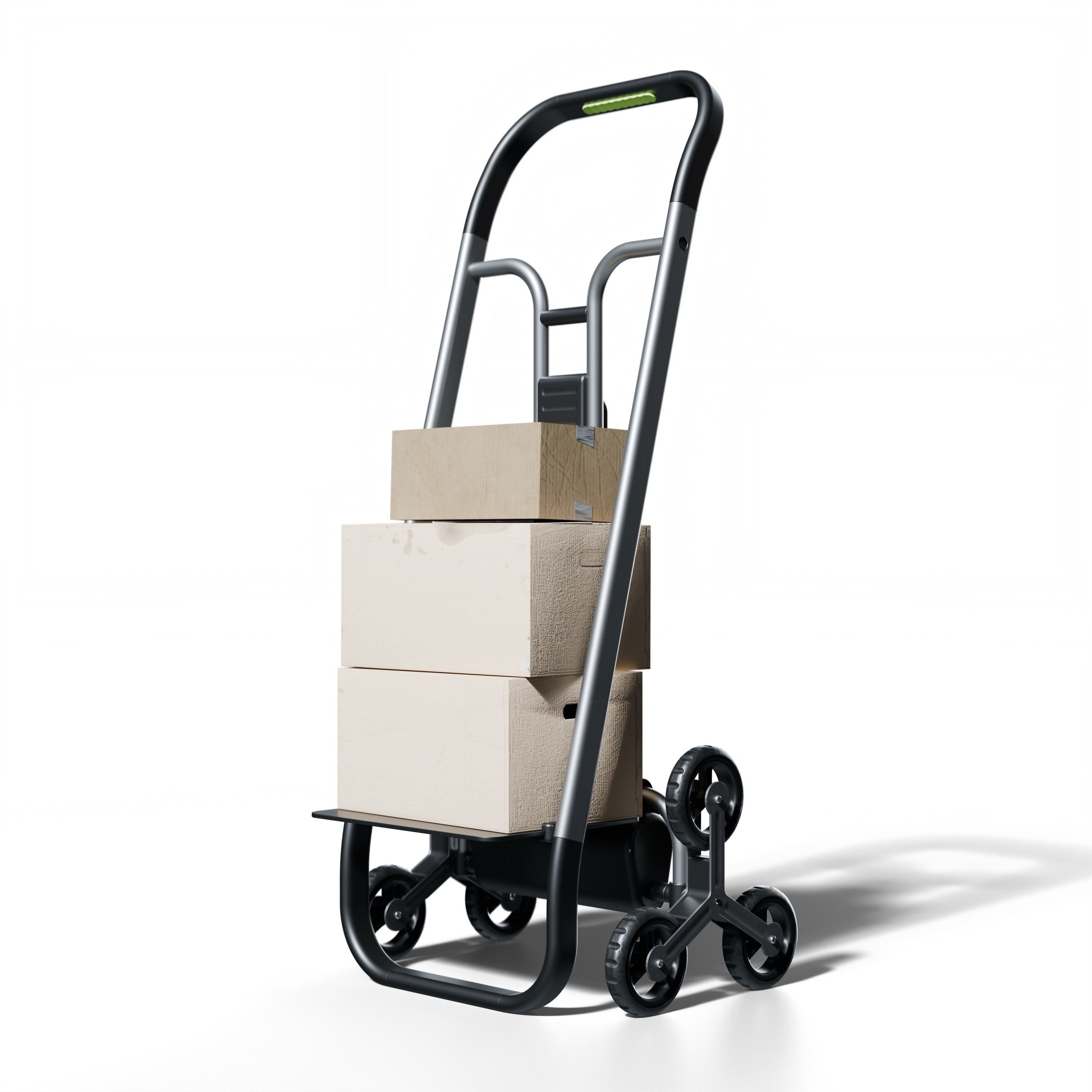
Living in a residential building without an elevator and struggling to transport heavy objects up the stairs — this is the precise pain point our project set out to address: a motorised trolley designed to take on that burden.
Living in a residential building without an elevator and struggling to transport heavy objects up the stairs — this is the precise pain point our project set out to address: a motorised trolley designed to take on that burden.


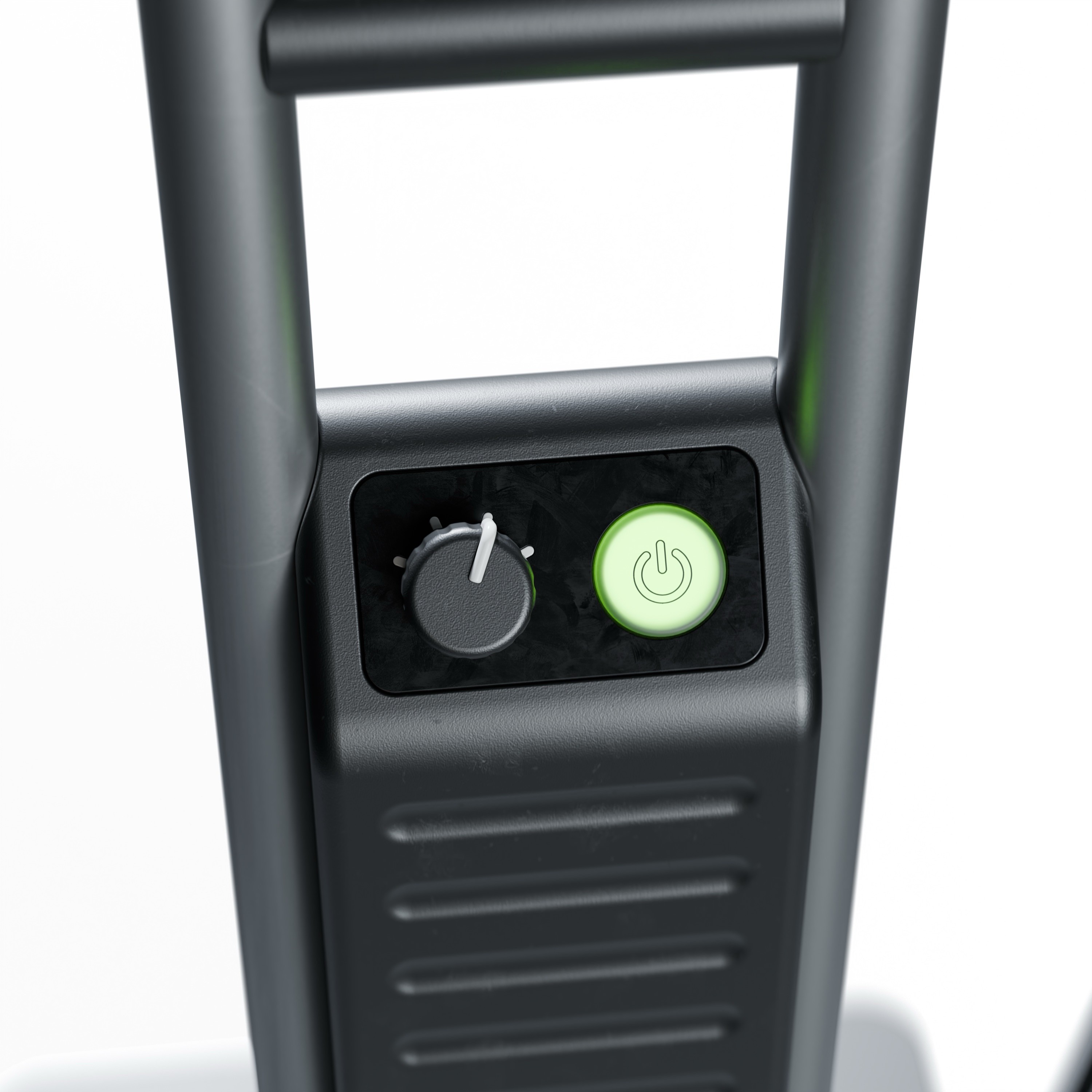
Existing products are either designed for different use contexts or lack a cohesive design language. After thorough research, we identified significant potential in both usability and visual identity. A design move that particularly excited us was the continuous perimeter frame — a single element functioning simultaneously as handle and base.
Existing products are either designed for different use contexts or lack a cohesive design language. After thorough research, we identified significant potential in both usability and visual identity. A design move that particularly excited us was the continuous perimeter frame — a single element functioning simultaneously as handle and base.

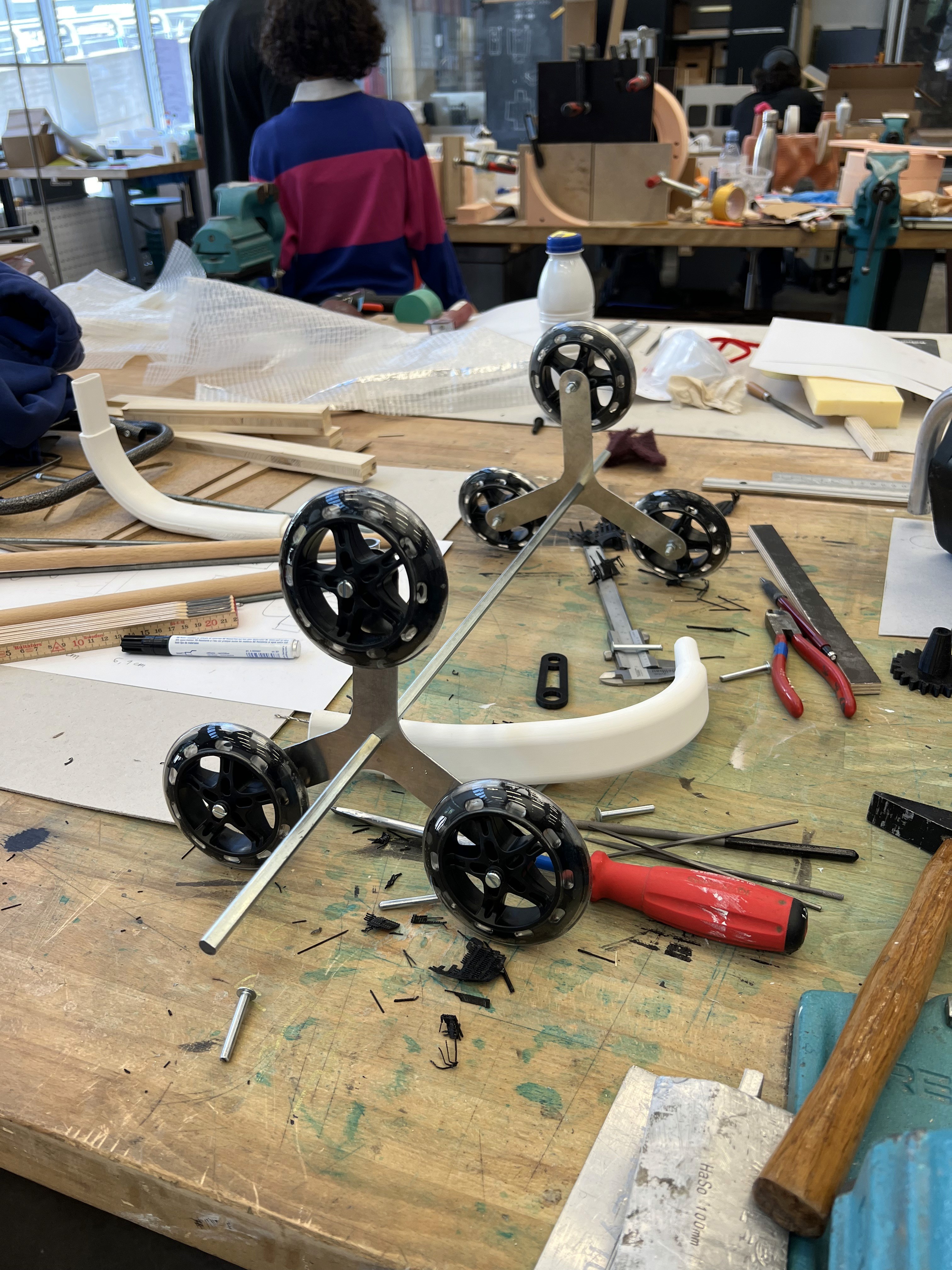
Our team brought together two Industrial Design students from ZHdK and three Mechanical Engineering students from ETH Zürich, with the shared ambition of delivering a fully functional prototype that was intuitive to use and considered in its design. Physical iterations informed scale and ergonomics, while a parallel CAD model supported the extensive use of 3D printing. My personal focus lay on the functional integrity of the prototype, the material strategy — aluminium and 3D-printed components — and the final renderings and 2D illustrations.
Our team brought together two Industrial Design students from ZHdK and three Mechanical Engineering students from ETH Zürich, with the shared ambition of delivering a fully functional prototype that was intuitive to use and considered in its design. Physical iterations informed scale and ergonomics, while a parallel CAD model supported the extensive use of 3D printing. My personal focus lay on the functional integrity of the prototype, the material strategy — aluminium and 3D-printed components — and the final renderings and 2D illustrations.