
somnii
goal
Better sleep by reshaping the day
focus
User interaction, Simplicity, BA exhibition
tools used
CAD (Onshape), FDM/SLA-Printing (Bambu/Formlabs), Rendering (Blender), Modeling, AI Coding (Arduino IDE)
year
2026
duration
3 months
lead by
ZHdK
Throughout the day, we absorb an uninterrupted stream of impressions — sounds, light, conversations, emotions, tasks. Yet our breaks are rarely true breaks. Instead of pausing, we reach for our phones and fill the silence with new stimuli. The moment external triggers disappear, internal ones grow louder. Thoughts begin to circle.
This project focuses on the transition from activity to rest — and on the question of how a physical object can create presence in that in-between space rather than distract from it.
Throughout the day, we absorb an uninterrupted stream of impressions — sounds, light, conversations, emotions, tasks. Yet our breaks are rarely true breaks. Instead of pausing, we reach for our phones and fill the silence with new stimuli. The moment external triggers disappear, internal ones grow louder. Thoughts begin to circle.
This project focuses on the transition from activity to rest — and on the question of how a physical object can create presence in that in-between space rather than distract from it.


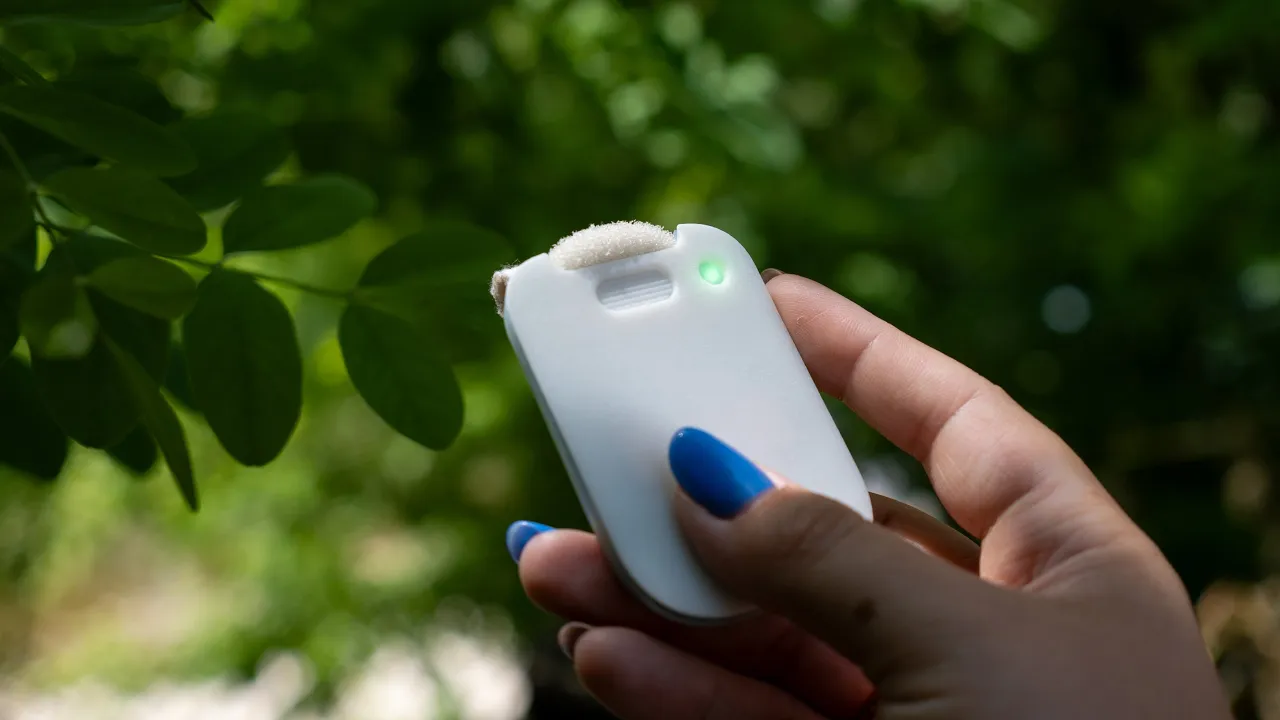
Somnii is a two-part system: a portable device worn on the body throughout the day, and a dock that becomes the centrepiece of the evening ritual. The portable captures ambient sound and light during moments of pause. In the evening, these recordings are transferred to the dock, which transforms them into an immersive sensory experience — a personal soundscape to ease the transition into sleep.
Somnii is a two-part system: a portable device worn on the body throughout the day, and a dock that becomes the centrepiece of the evening ritual. The portable captures ambient sound and light during moments of pause. In the evening, these recordings are transferred to the dock, which transforms them into an immersive sensory experience — a personal soundscape to ease the transition into sleep.


The research process combined a survey of over 40 participants, an interview with sleep researcher Prof. Dr. Björn Rasch, and an in-depth exploration of cultural gestures of release — from Japanese Omikuji to the ritual of burning written thoughts. A key insight emerged: the problem rarely lives in the night itself. It lives in the day, and in how little space we allow ourselves to process it.
The interaction was reduced to its most essential form. Opening the portable triggers a recording; closing it saves the moment. A magnetic closure provides both the tactile ritual and the functional mechanism. A single gesture that is simultaneously satisfying and intentional. In the evening, a pull cord activates the dock, slowly dimming the light and layering the day's collected sounds over a steady base tone. The experience fades on its own, or simply when sleep arrives first.
The research process combined a survey of over 40 participants, an interview with sleep researcher Prof. Dr. Björn Rasch, and an in-depth exploration of cultural gestures of release — from Japanese Omikuji to the ritual of burning written thoughts. A key insight emerged: the problem rarely lives in the night itself. It lives in the day, and in how little space we allow ourselves to process it.
The interaction was reduced to its most essential form. Opening the portable triggers a recording; closing it saves the moment. A magnetic closure provides both the tactile ritual and the functional mechanism. A single gesture that is simultaneously satisfying and intentional. In the evening, a pull cord activates the dock, slowly dimming the light and layering the day's collected sounds over a steady base tone. The experience fades on its own, or simply when sleep arrives first.


